Mushrooms for Blood Cancers Require a Different Approach
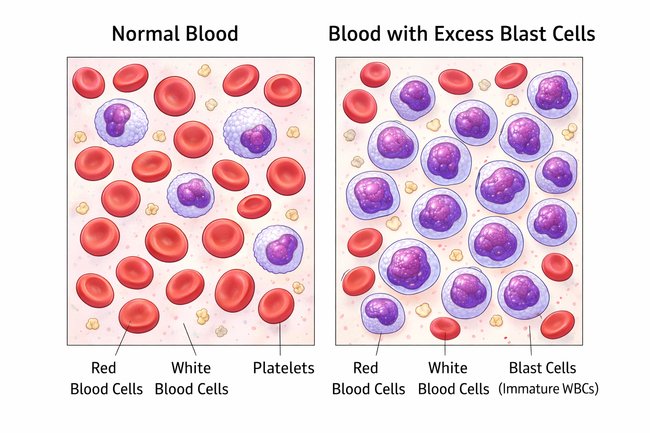
When people search for information about mushrooms and cancer, they often find articles listing the “best mushrooms for cancer support.” These lists usually include well-known names like turkey tail for immune support research in cancer, reishi for immune modulation and safety concerns, lion’s mane as a nervine growth factor, and cordyceps for stress—and they often sound broadly applicable to all cancers. Since I’m always looking for holistic senior health, I’ve found one for immune regulation and MDS research. The mushroom that I’ve decided to use is Maitake D-fraction focused.
Maitake D-fraction is a concentrated extract derived from the maitake mushroom (Grifola frondosa), a medicinal mushroom long used in traditional Japanese and Chinese medicine. The term “D-fraction” refers to a specific group of biologically active compounds called beta-glucan polysaccharides, which are isolated and standardized through extraction. These beta-glucans are not nutrients in the usual sense; instead, they act as biological response modifiers, meaning they help regulate how the immune system responds rather than overstimulating it.
Research suggests that Maitake D-fraction primarily supports the immune system by enhancing communication between immune cells, including macrophages, natural killer (NK) cells, and certain T-cells. Rather than acting as a direct treatment, it appears to help the body recognize and respond more appropriately to abnormal or stressed cells. For this reason, Maitake D-fraction is often discussed in the context of immune resilience, metabolic balance (including insulin sensitivity), and overall systemic support during periods of physiological stress. It is commonly used as a complementary wellness supplement, especially by individuals interested in immune modulation rather than immune “boosting.”

There is a critical distinction that is rarely explained:
Blood cancers such as leukemia, myelodysplastic syndromes (MDS), lymphoma, and myeloma are fundamentally different from solid tumors.
Failing to make this distinction can lead to confusion, unrealistic expectations, and—in some cases—poor supplement choices. This article explains why blood cancers require a different approach, and how medicinal mushrooms should be viewed more cautiously and thoughtfully in these conditions.
Solid Tumors vs. Blood Cancers: A Crucial Difference
Most mushroom research related to cancer focuses on solid tumors—cancers that form discrete masses in organs such as the breast, colon, lung, or prostate.
Solid tumors:
-
Are localized (at least initially)

-
Exist outside the immune system
-
Can often be surgically removed or targeted
-
Allow the immune system to act against them
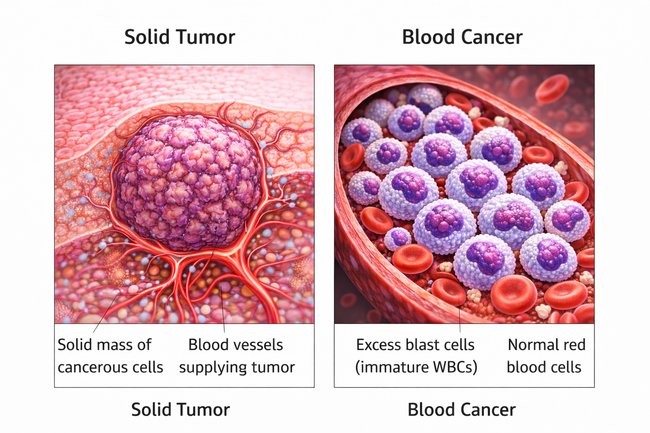
Blood cancers are different.
In leukemia and MDS:
-
The cancer involves the bone marrow
-
The cancer is the immune system
-
Malignant cells circulate throughout the blood
-
Immune signaling itself is dysregulated
This distinction changes everything.
Why Immune “Boosting” Can Be Problematic in Blood Cancers
Many mushroom articles promote immune “boosting” as a universal good. That framing works better for solid tumors, where immune activation may help the body recognize and attack abnormal cells.
In blood cancers, however:
-
Immune cells themselves may be malignant
-
Overstimulation can increase inflammatory signaling
-
Cytokine activity can become chaotic rather than helpful
-
The goal shifts from stimulation to regulation
This is why advice that sounds helpful for one type of cancer may be inappropriate—or even counterproductive—for another.
Natural Approaches That Sound Logical — But Don’t Work the Same for Blood Cancers
When facing a blood cancer such as leukemia or myelodysplastic syndromes (MDS), many people naturally look for ways to “support” the bone marrow, immune system, or blood itself. Unfortunately, some approaches that sound reasonable on the surface are based on assumptions that do not match the biology of blood cancers.
Understanding what doesn’t help can be just as important as knowing what might.
Below are several commonly discussed natural approaches that often make intuitive sense—but are not appropriate or supported for blood cancers.
Bone Marrow Supplements
Bone marrow supplements are typically desiccated bovine marrow marketed to “support” blood production. While they may provide nutrients such as iron, B vitamins, and minerals, they are not designed to treat marrow disorders.
In blood cancers, the issue is not a lack of nutrients—it is dysregulated cell production. Providing growth substrates does not correct abnormal marrow signaling and may theoretically encourage unwanted cell proliferation. There is no credible research showing benefit for leukemia or MDS.
Immune “Boosters”
Products marketed to “boost immunity” often contain high-dose beta-glucans, herbs, or mushroom blends designed to stimulate immune activity.
In blood cancers, this approach can be problematic because:
-
The immune system itself may be abnormal
-
Overstimulation can increase inflammatory signaling
-
Immune activation is not the same as immune regulation
For blood cancers, balance and control matter more than stimulation.
High-Dose Mushroom Blends
While individual medicinal mushrooms are often studied one at a time, many supplements combine multiple species into a single product. This makes it difficult to understand what is helping—or harming.
In blood cancers:
-
Multiple immune signals at once increase unpredictability
-
Lab changes become harder to interpret
-
Side effects are more difficult to trace
When the marrow is involved, simplicity is safer than stacking.
Iron or “Blood-Building” Supplements (Without Deficiency)
Iron and blood-building formulas are frequently suggested for anemia. However, in leukemia and MDS, anemia is often due to marrow dysfunction, not iron deficiency.
Supplementing iron without a documented deficiency:
-
Does not correct dysplasia
-
May increase oxidative stress
-
Can complicate lab interpretation
Blood counts reflect marrow signaling—not just nutrient availability.
General Detox or Cleanse Protocols
Cleanses and detox programs are sometimes promoted to “reset” the body or immune system. These approaches are not evidence-based for blood cancers and can cause unnecessary stress on the liver, kidneys, and overall metabolism.
Blood cancers are not caused by toxin accumulation, and detox protocols do not address marrow-level disease.
Why These Approaches Persist
Many of these ideas continue to circulate because they:
-
Sound intuitive
-
Align with general wellness logic
-
Are helpful in other, non-cancer contexts
But blood cancers require a different lens. What supports a healthy system does not automatically support a dysregulated one.
A Better Guiding Principle
For blood cancers, the goal is not to push the system harder—it is to avoid adding biological noise.
This means favoring:
-
Regulation over stimulation
-
Simplicity over complexity
-
Observation over constant intervention
Sometimes, doing less is the more responsible choice.
Some readers ask whether any medicinal mushrooms have been studied specifically in blood cancers. One extract that appears in limited human research is Maitake D-fraction, which has been explored for immune regulation in myelodysplastic syndromes (MDS). This does not mean it treats or cures blood cancer, and research is still limited. I mention it here for informational context only, not as a recommendation or replacement for medical care. If readers choose to explore this further, quality, dosage, and individual circumstances matter. Here is the product that I use. Research for yourself to see if this would be recommended in your specific situation.
This product is an affiliate link, which means that if you purchase it, I may receive a small commission – but never any additional cost to you! The important thing is – does it work for you? It’s the one that I take personally…along with other nutrients, as part of my holistic cancer approach.
What the Research Actually Shows (and What It Doesn’t)
Medicinal mushrooms have been studied extensively in cancer research, particularly in Asia. However, most human studies involve solid tumors, often using mushroom extracts alongside conventional treatments.
For blood cancers:
-
Human data is limited
-
Evidence is often preclinical (cell or animal studies)
-
Outcomes such as survival or remission are rarely studied
-
Safety and immune balance matter more than aggression
This does not mean mushrooms have no role—it means their role must be modest, individualized, and carefully framed.
Why “Best Mushroom” Lists Can Be Misleading
Many popular articles group all cancers together and recommend:
-
Mushroom blends
-
High-dose beta-glucans
-
Aggressive immune activation
-
Multiple supplements at once
For someone with a blood cancer, this approach creates problems:
-
It’s impossible to tell what is helping or harming
-
Lab changes become harder to interpret
-
Immune signaling can become unpredictable
-
Bleeding or clotting risks may increase
In blood cancers, less is often safer than more.
A More Responsible Framework for Blood Cancers
Rather than asking:
“Which mushrooms fight cancer?”
A better question is:
“Which mushrooms, if any, may support immune balance without overstimulation?”
Key principles include:
-
Favor single extracts, not blends
-
Start low and go slowly
-
Avoid “immune boosting” language
-
Monitor blood counts and symptoms
-
Accept that stability can be a meaningful outcome
In marrow disorders, maintaining equilibrium is often more valuable than chasing dramatic changes.
Why Outcomes Are Not Always About Access or Cost
One of the hardest realities for people with blood cancers is realizing that:
-
Even the most advanced treatments
-
Even unlimited financial resources
-
Even the best medical institutions
do not guarantee a different outcome.
Stem cell transplants, chemotherapy, and experimental protocols can be lifesaving for some—but they also fail for others. Blood cancers follow their own biological logic, and not all paths lead to the same destination.
This reality is painful, but it also removes a false burden: the idea that not pursuing every possible intervention means giving up.
Sometimes it simply means choosing a different definition of care.
Where Medicinal Mushrooms May Fit—Carefully
For some individuals with blood cancers, certain mushroom extracts may be considered as supportive tools—not treatments, and not cures.
Their potential role may include:
-
Supporting immune regulation rather than activation
-
Supporting gut health, which influences immunity
-
Avoiding additional physiological stress
Any such use should be:
-
Conservative
-
Transparent
-
Free of exaggerated claims
-
Re-evaluated regularly
Mushrooms are not a substitute for medical care—but neither should they be framed as universal solutions.
An Ethical Responsibility in Health Writing
Writers and publishers have a responsibility to:
-
Distinguish between cancer types
-
Avoid one-size-fits-all advice
-
Acknowledge uncertainty honestly
-
Respect the complexity of blood cancers
Readers deserve clarity, not hype.
If you are navigating a blood cancer and researching natural support, the most important takeaway is this:
Advice that applies to solid tumors does not automatically apply to leukemia or MDS.
Understanding that difference is not discouraging—it is empowering. Feel free to contact me with any questions or comments, and be sure to research this website for more practical living resources.
About the Author
Pamela M. Rumley, ND is a Doctor of Naturopathy and natural health educator who writes about circulation, nutrition, oxygen delivery, and practical wellness strategies. She previously operated a natural health clinic where she worked directly with clients and studied techniques such as darkfield microscopy to observe live blood samples. Today she focuses on research, writing, and education to help readers better understand how the body works and how lifestyle choices can support long-term wellness.
Credentials
- Doctor of Naturopathy – Trinity School of Natural Health
• Master Herbalist – Dr. Christopher School of Natural Healing
• Certified Natural Health Professional – National Association of Certified Natural Health Professionals
• Former Natural Health Clinic Practitioner
• Training in Darkfield Microscopy and Live Blood Analysis
Learn more at PamRumley.com