Turkey Tail Mushroom for Immune Support
(Trametes versicolor) is one of the most researched medicinal mushrooms in the world, particularly for its role in immune system support during serious illness. While it is not a cure for cancer—and should never be framed as one—it has earned attention for how it supports the body’s natural immune response, especially during cancer treatment and recovery.
Unlike culinary mushrooms, Turkey Tail is woody and fibrous, making it unsuitable for eating as food. Its value lies in its bioactive compounds, which have been used traditionally for centuries and studied extensively in modern research, particularly in Japan and China.
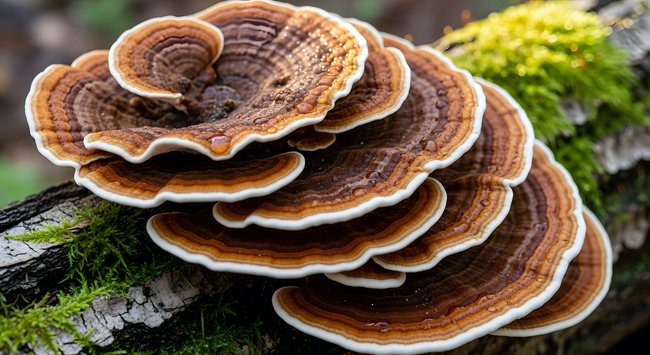
What Makes Turkey Tail Mushroom Different from Other Medicinal Mushrooms
Many medicinal mushrooms support immunity, but Turkey Tail stands apart because it focuses on immune modulation, not immune stimulation.
That distinction matters.
Instead of simply “boosting” the immune system—which can be problematic in people with autoimmune issues or those undergoing aggressive treatments—Turkey Tail helps regulate and balance immune activity. This makes it especially relevant for individuals whose immune systems are under stress, including those dealing with cancer, chronic illness, or recovery after treatment.
Key compounds responsible for this effect include:
-
Polysaccharide-K (PSK)
-
Polysaccharopeptide (PSP)
These compounds have been widely studied for their effects on immune signaling, white blood cell activity, and overall immune resilience.
How Turkey Tail Supports the Immune System
Turkey Tail works through several interconnected pathways:
1. Immune Cell Support
Research shows that Turkey Tail compounds can support the activity of natural killer (NK) cells, macrophages, and T-cells—key players in immune surveillance.
2. Inflammatory Balance
Rather than pushing the immune system into overdrive, Turkey Tail appears to help normalize immune responses, supporting appropriate inflammation without excessive immune stress.
3. Gut–Immune Connection
A significant portion of the immune system resides in the gut. Turkey Tail functions as a prebiotic, nourishing beneficial gut bacteria that play a direct role in immune regulation.
This gut–immune axis is especially important for people whose digestion, nutrient absorption, and microbiome balance may be compromised due to illness or treatment. It a senior health strategy
Turkey Tail and Cancer Support: What the Research Really Shows
Turkey Tail is one of the few medicinal mushrooms that has been studied alongside conventional cancer treatments, particularly in Asia.
Important clarification:
Turkey Tail is not a cancer treatment. It does not replace chemotherapy, radiation, surgery, or medical supervision.
What research does suggest is that Turkey Tail may help:
-
Support immune function during conventional treatment
-
Improve immune recovery following treatment
-
Support quality of life and resilience in recovery phases
-
Help protect gut health, which is often damaged during treatment
In Japan, PSK extracted from Turkey Tail has been used as an adjunct therapy, meaning it is used alongside standard care to support immune response—not as a standalone therapy.
This distinction is critical and should always be made clear.
Why Gut Health Matters So Much During Cancer and Recovery
Cancer treatment often disrupts the gut microbiome. Antibiotics, chemotherapy, stress, and dietary changes can all reduce beneficial bacteria.
Turkey Tail helps by:
-
Acting as a prebiotic fiber
-
Encouraging microbial diversity
-
Supporting gut barrier integrity
-
Indirectly strengthening immune signaling
A healthier gut environment supports better nutrient absorption, more stable energy, and more balanced immune activity—key factors during recovery.
Forms of Turkey Tail: What to Look For
Because Turkey Tail is not edible, supplements matter.
Best forms include:
-
Dual-extracted capsules or powders (water + alcohol extraction)
-
Products made from the fruiting body, not just mycelium
-
Clearly labeled beta-glucan content
-
Third-party tested for purity and contaminants
Avoid vague labels, proprietary blends with no dosage transparency, or products that make exaggerated cancer claims.
Safety Considerations
Turkey Tail is generally well tolerated, but caution is still appropriate.
-
Always consult a healthcare provider if undergoing cancer treatment
-
Monitor for digestive changes when starting
-
Avoid combining with immune-modulating drugs without guidance
“Natural” does not mean risk-free—especially in complex medical situations.
How Turkey Tail Fits into a Medicinal Mushroom System
Turkey Tail works best as part of a broader support approach, not in isolation.
-
Reishi supports stress regulation and immune balance
-
Lion’s Mane supports nerve and cognitive health
-
Cordyceps supports energy and oxygen utilization
-
Turkey Tail supports immune modulation and gut health
Together, they address different systems without overlap or redundancy.

How to Talk to Your Doctor About Medicinal Mushrooms
If you’re considering adding medicinal mushrooms such as Turkey Tail to your wellness routine—especially during cancer treatment or recovery—it’s important to have an open and respectful conversation with your healthcare provider.
Many doctors are cautious about supplements not because they oppose natural approaches, but because they need to understand what you’re taking, why you’re taking it, and how it may interact with your current care plan.
Here are a few ways to make that conversation more productive.
Start With Support Ensuring, Not Replacement
Instead of framing supplements as an alternative to treatment, try saying:
“I’m interested in supporting my immune system and gut health alongside my current treatment. I’m not looking to replace anything—just to support my recovery.”
This signals cooperation, not resistance.
Ask About Safety and Interactions
Good questions to ask include:
-
“Are there any known interactions with my current medications?”
-
“Is there anything about my treatment plan that would make this unsafe right now?”
-
“Would timing matter—such as taking this away from medications or treatment days?”
Doctors are trained to evaluate risk, and these questions align with that role.
Share Reliable, Simple Information
If your doctor isn’t familiar with Turkey Tail, you don’t need to overwhelm them with studies.
You can say:
“Turkey Tail has been studied for immune support and gut health, particularly in recovery. I’m happy to share the product label or research summaries if helpful.”
Keep it factual and concise.
Respect Different Perspectives
Not all healthcare providers will be supportive—and that doesn’t mean the conversation has failed.
If your doctor advises against a supplement:
-
Ask why
-
Ask if the concern is dosage, timing, or interaction
-
Ask if it could be revisited later during recovery
Sometimes “not now” is different from “never.”
Track and Report Changes
If you and your provider agree to proceed:
-
Start with a low dose
-
Monitor digestion, energy, and immune-related changes
-
Report anything unusual promptly
This shows responsibility and builds trust.
You Are Part of the Care Team
It’s reasonable—and healthy—to take an active role in your care.
Supporting your body with nutrition, lifestyle choices, and well-researched supplements does not mean rejecting medical care. The goal is informed partnership, not opposition.
A Gentle Reminder
Every person’s situation is unique. What supports one individual may not be appropriate for another. Thoughtful conversations with qualified professionals help ensure that any supplement fits safely into your overall health plan. Please contact me with any questions or comments.
About the Author
Pamela M. Rumley, ND is a Doctor of Naturopathy and natural health educator who writes about circulation, nutrition, oxygen delivery, and practical wellness strategies. She previously operated a natural health clinic where she worked directly with clients and studied techniques such as darkfield microscopy to observe live blood samples. Today she focuses on research, writing, and education to help readers better understand how the body works and how lifestyle choices can support long-term wellness.
Credentials
- Doctor of Naturopathy – Trinity School of Natural Health
• Master Herbalist – Dr. Christopher School of Natural Healing
• Certified Natural Health Professional – National Association of Certified Natural Health Professionals
• Former Natural Health Clinic Practitioner
• Training in Darkfield Microscopy and Live Blood Analysis
Learn more at PamRumley.com
Final Thoughts
Turkey Tail mushroom earns its reputation not because of hype, but because of measured, consistent research focused on immune resilience and recovery support.
For individuals navigating cancer, chronic illness, or immune recovery, Turkey Tail may offer meaningful support—when used responsibly, ethically, and as part of a comprehensive care plan.
It is not a miracle.
It is a tool—and when used wisely, a valuable one. Please contact me with questions or comments on this article.
This is an excellent move—and honestly, very few natural-health sites do this well.
Below is a calm, respectful, non-confrontational “How to Talk to Your Doctor” section you can reuse across all cancer-adjacent articles. It positions the reader as informed and cooperative, not combative.
Turkey Tail is most effective when viewed as part of a broader, whole-body approach to healing and recovery. Other medicinal mushrooms each play a unique role in this system—Reishi for immune balance and stress regulation, Lion’s Mane for nerve and cognitive support, and Cordyceps for energy, oxygen utilization, and physical resilience. Together, these mushrooms support different systems without overlap, creating a more comprehensive foundation for wellness. If you are navigating cancer or recovery, you may also find it helpful to explore our in-depth articles on immune support during cancer and healing, where we discuss how nutrition, lifestyle choices, and targeted natural support can work alongside conventional care. Understanding how these tools fit together allows you to make informed, thoughtful decisions—rather than relying on any single supplement in isolation. When you’re researching medicinal mushrooms, be sure to check out my article on blood cancers. Treating them can mean a big difference in how they are treated.