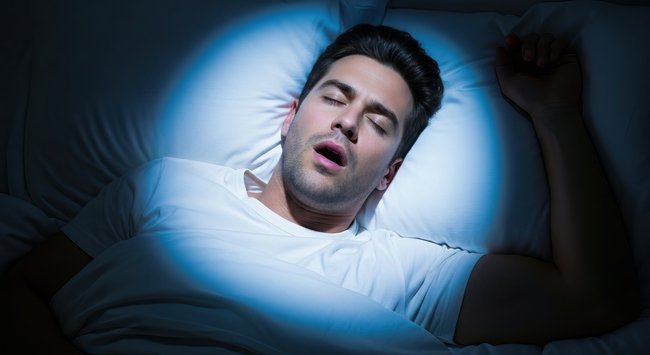
If breathing becomes too shallow — or briefly stops — oxygen saturation levels may drop below optimal levels.
What Are Normal Oxygen Levels at Night?
Most healthy adults maintain oxygen saturation (SpO2) between:
95–100% while awake
During sleep, brief dips into 90–94% may occur and can be normal.
However, levels consistently below 90% are concerning and may indicate sleep-disordered breathing.
Even mild but repeated drops can leave you feeling:
-
Groggy
-
Foggy
-
Irritable
-
Unrested
Signs Your Oxygen May Be Dropping at Night
You may not realize it’s happening. But your body often leaves clues.
Common signs include:
-
Waking up tired despite 7–8 hours of sleep
-
Morning headaches
-
Brain fog
-
Dry mouth
-
Snoring
-
Gasping or choking at night
-
Frequent nighttime waking
-
Daytime sleepiness
-
Cold hands and feet
See Related Articles:
If these symptoms sound familiar, nighttime oxygen dips may be part of the picture.
The Role of Sleep Apnea
One of the most common causes of low oxygen at night is sleep apnea.
There are two main types:
Obstructive Sleep Apnea (OSA)
Airway collapses or becomes blocked during sleep.
Central Sleep Apnea
Brain temporarily fails to signal breathing muscles.
OSA is far more common, especially after 50.
During an apnea episode:
This cycle may repeat dozens of times per hour.
The result? Fragmented sleep and poor oxygen delivery.
CPAP Machines: Pros and Cons
The most common treatment for moderate to severe sleep apnea is a CPAP machine (Continuous Positive Airway Pressure).
It works by delivering steady air pressure to keep the airway open during sleep.
Let’s look at the balanced view.
CPAP Pros
✔ Keeps airway open
✔ Prevents oxygen drops
✔ Reduces snoring
✔ Improves daytime alertness
✔ Lowers risk of heart strain
✔ May reduce blood pressure
✔ Can improve long-term cardiovascular outcomes
For individuals with confirmed moderate to severe sleep apnea, CPAP can be life-changing.
Many users report:
-
Better energy
-
Clearer thinking
-
Fewer headaches
-
Improved mood
CPAP Cons
However, CPAP is not perfect for everyone.
Some common challenges include:
-
Mask discomfort
-
Skin irritation
-
Dry mouth
-
Claustrophobic feeling
-
Noise disturbance
-
Travel inconvenience
-
Compliance difficulty
Some people find it hard to sleep naturally while wearing the device.
Others may discontinue use due to discomfort.
That’s why CPAP decisions should be individualized and made with medical guidance.
Natural Ways to Support Nighttime Oxygen
If you do not have severe sleep apnea — or if you are looking for complementary support — there are lifestyle strategies that may help improve nighttime oxygen levels.
1. Improve Nasal Breathing
Mouth breathing at night can reduce efficient oxygen exchange.
Consider:
2. Optimize Sleep Position
Sleeping flat on your back can increase airway collapse.
Side sleeping often improves airflow and reduces snoring.
3. Support Healthy Weight
Even modest weight reduction can:
4. Strengthen Respiratory Muscles
Gentle breathing exercises may help:
(Internal link here to your deep breathing article.)
5. Support Circulation
Healthy circulation helps oxygen travel efficiently.
Focus on:
6. Reduce Evening Inflammation
Inflammation can narrow airways.
Strategies may include:
When to Seek Evaluation
If you experience:
It may be wise to discuss sleep testing with a healthcare provider.
A simple overnight home sleep test can often detect apnea.
Addressing oxygen drops early can protect long-term brain and heart health.
Why Nighttime Oxygen Matters After 50
Oxygen is not just about breathing — it’s about cellular energy.
Repeated oxygen dips at night may contribute to:
Sleep is when the brain repairs, detoxifies, and consolidates memory.
Without adequate oxygen, that repair process may be compromised.
Supporting nighttime oxygen may be one of the most overlooked steps in healthy aging.
Please feel free to contact me with questions or comments.
About the Author
Pamela M. Rumley, ND is a Doctor of Naturopathy and natural health educator who writes about circulation, nutrition, oxygen delivery, and practical wellness strategies. She previously operated a natural health clinic where she worked directly with clients and studied techniques such as darkfield microscopy to observe live blood samples. Today she focuses on research, writing, and education to help readers better understand how the body works and how lifestyle choices can support long-term wellness.
Credentials
- Doctor of Naturopathy – Trinity School of Natural Health
• Master Herbalist – Dr. Christopher School of Natural Healing
• Certified Natural Health Professional – National Association of Certified Natural Health Professionals
• Former Natural Health Clinic Practitioner
• Training in Darkfield Microscopy and Live Blood Analysis
Learn more at PamRumley.com
Final Thoughts
If you wake up feeling unrefreshed, don’t ignore it.
Low oxygen at night is common — but it is not inevitable.
Whether through lifestyle adjustments, breathing improvements, or appropriate medical treatment like CPAP when necessary, protecting oxygen levels during sleep may significantly improve how you feel during the day.
Your body works hard while you rest.
Give it the oxygen it needs to restore and renew.
As always, please feel free to contact me with questions or comments.