Home Safety for Seniors – A Room-by-Room Guide to Prevent Falls

Most falls happen at home—and often from things we see every day but don’t think twice about. Study this home safety guide and give your home a check-up.
It’s not usually one big hazard. It’s the small things: a dim hallway, a loose rug, a step taken too quickly. Over time, these small risks can add up.
The good news is that a safer home doesn’t require major changes. A few simple adjustments, room by room, can make a big difference in reducing fall risk and maintaining independence. Creating a safer home starts with awareness – Read more about fall prevention for seniors and how to stay safe at home.
What You’ll Find in This Home Safety Guide Article
In this guide, you’ll learn:
- Where falls are most likely to happen in the home
- What to look for in each room
- Simple, practical ways to reduce risk
- How to create a safer, more comfortable living space
Many falls happen due to everyday hazards – See the top causes of falls in seniors.
Entryways and Hallways
These areas are often overlooked but can quickly become hazardous.
Shoes, bags, or small objects left near the door can create tripping hazards. Hallways that are dimly lit make it harder to see obstacles clearly.
What Helps:
- Keep walkways clear and uncluttered
- Add bright, consistent lighting
- Remove or secure loose rugs
Living Room Safety
The living room is where many people spend the most time, but it can also contain hidden risks.
Furniture that is too low or too close together can make it harder to move safely.
What Helps:
- Arrange furniture with clear walking paths
- Avoid low or unstable seating
- Keep cords and clutter out of walkways
Kitchen Safety
The kitchen involves movement, reaching, and handling hot or wet items—all of which can increase fall risk.
Reaching for items on high shelves or slipping on spills are common concerns.
What Helps:
- Keep frequently used items within easy reach
- Clean up spills right away
- Wear supportive, non-slip footwear
Bedroom Safety
Getting in and out of bed—especially at night—can be a risky moment.
This is something many people don’t think about until they experience a close call.
What Helps:
- Keep a clear path from the bed to the door or bathroom
- Use a bedside lamp or night light
- Make sure the bed height is comfortable for sitting and standing
Bathroom Safety
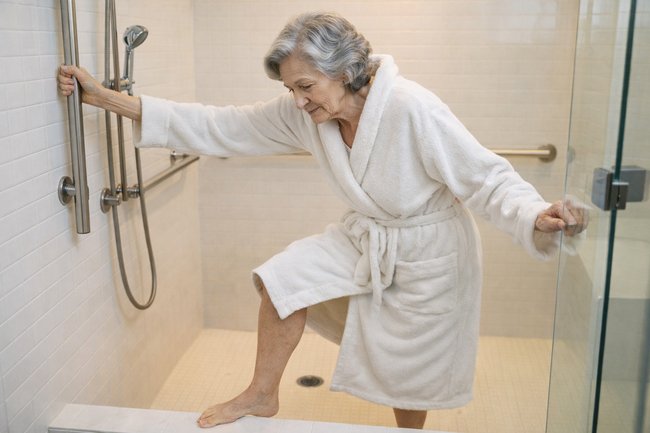
Bathrooms are one of the most common places for falls due to slippery surfaces and limited support.
Even a routine step like entering the shower can become a fall risk without proper stability.
For a closer look at this high-risk area, see our guide on bathroom safety for seniors and simple ways to prevent falls.
Stairways and Steps
Stairs require balance, coordination, and good visibility—all of which can change over time.
A missed step or poor lighting can quickly lead to a fall.
What Helps:
- Install handrails on both sides if possible
- Keep stairs well lit
- Avoid carrying items that block your view
Many falls happen on stairs—learn more about the top causes of falls in seniors and how to prevent them.
General Safety Tips
Beyond specific rooms, there are everyday habits that can reduce fall risk:
- Move slowly and avoid rushing
- Pay attention to how your body feels
- Stay active to maintain strength and balance
Falls are not a normal part of aging—read more about fall prevention for seniors and how to stay safe at home.
Small Changes That Make a Big Difference
Creating a safer home doesn’t have to be complicated.
Often, it’s the simple changes that matter most:
- Better lighting
- Clear pathways
- Stable support where needed
- Thoughtful placement of everyday items
Over time, these small improvements can help reduce risk and increase confidence in daily movement.
Final Thoughts
A safe home is one of the most important factors in maintaining independence and quality of life.
By taking a room-by-room approach, it becomes easier to identify risks and make meaningful changes.
The goal isn’t perfection—it’s awareness and simple, practical improvements that make everyday life safer.
As always, please contact me with questions or comments.
About the Author
Pamela M. Rumley, ND is a Doctor of Naturopathy and natural health educator who writes about circulation, nutrition, oxygen delivery, and practical wellness strategies. She previously operated a natural health clinic where she worked directly with clients and studied techniques such as darkfield microscopy to observe live blood samples. Today she focuses on research, writing, and education to help readers better understand how the body works and how lifestyle choices can support long-term wellness.
Credentials
- Doctor of Naturopathy – Trinity School of Natural Health
• Master Herbalist – Dr. Christopher School of Natural Healing
• Certified Natural Health Professional – National Association of Certified Natural Health Professionals
• Former Natural Health Clinic Practitioner
• Training in Darkfield Microscopy and Live Blood Analysis
Learn more at PamRumley.com
Home Safety Guide – Frequently Asked Questions
Where do most falls happen in the home?
Falls most often occur in bathrooms, stairways, and cluttered living areas where surfaces may be slippery or obstacles are present.
What is the easiest way to improve home safety?
Start by removing tripping hazards, improving lighting, and adding support features like grab bars in high-risk areas.
Do small changes really help prevent falls?
Yes—small changes like securing rugs or adding night lights can significantly reduce fall risk over time.
Why is lighting so important for fall prevention?
Poor lighting makes it harder to see obstacles, especially at night, increasing the chance of missteps or loss of balance.
Is it possible to make a home safe without major renovations?
Absolutely—many effective safety improvements are simple, affordable, and easy to implement.