Why Do Your Hands Fall Asleep at Night? (Causes You Shouldn’t Ignore)

Waking up in the middle of the night with numb, tingling hands can be both uncomfortable and concerning. Many people describe it as their hands “falling asleep,” often accompanied by a pins-and-needles sensation or temporary loss of feeling.
While this can sometimes be caused by something as simple as sleeping position, it may also point to deeper issues involving circulation, nerve pressure, or even nutrient imbalances.
Understanding why your hands fall asleep at night can help you determine whether it’s a harmless occurrence—or a sign that your body is trying to tell you something more important.
WHAT YOU’LL FIND IN THIS ARTICLE
In this article, you’ll learn:
- The most common reasons hands fall asleep at night
- The difference between circulation problems and nerve compression
- How sleeping position affects blood flow and nerves
- When numb hands may signal a deeper health issue
- Simple steps that may help improve symptoms
WHAT CAUSES HANDS TO FALL ASLEEP AT NIGHT?
1. Nerve Compression (Most Common Cause)
One of the most common reasons for numb hands during sleep is pressure on the nerves, particularly in the wrist, elbow, or shoulder.
When you sleep in a position that compresses a nerve:
- Signals from the brain are interrupted
- Sensation decreases
- Tingling or numbness occurs
This is especially common if you:
- Sleep with your arms under your body
- Bend your wrists or elbows for long periods
- Rest your head on your arm
2. Poor Circulation During Sleep
Circulation plays a major role in how your hands feel at night. See 10 signs of poor circulation for more insight.
When blood flow is reduced:
- Oxygen delivery drops
- Nerves become more sensitive
- Tingling or numbness can occur
This may happen if:
- You sleep on your arm
- Blood vessels are compressed
- Circulation is already sluggish
This may also relate to how well your body delivers oxygen—learn more in this article on red blood cells and oxygen delivery
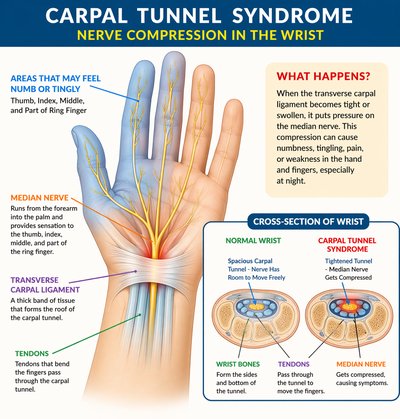
3. Carpal Tunnel Syndrome
Carpal tunnel syndrome occurs when the median nerve is compressed at the wrist.
Symptoms often include:
- Numbness in the thumb, index, and middle fingers
- Tingling that worsens at night
- Weakness in the hand
Nighttime symptoms are common because:
- Wrist position during sleep increases pressure
4. Magnesium Deficiency
Magnesium deficiency is often overlooked – read more about low magnesium symptoms. Low magnesium levels may contribute to:
- Nerve sensitivity
- Muscle tension
- Increased tingling sensations
Magnesium plays a role in:
- Nerve signaling
- Muscle relaxation
- Circulation support
5. Cervical (Neck) Issues
Sometimes the problem doesn’t start in the hands at all.
Compression in the neck (cervical spine) can:
- Affect nerves traveling to the arms
- Cause numbness or tingling in the hands
This is more likely if you also have:
- Neck stiffness
- Shoulder discomfort
- Symptoms in one arm more than the other
WHEN SHOULD YOU PAY ATTENTION?
Occasional numbness is usually harmless.
But you may want to look deeper if:
- It happens every night
- Symptoms are getting worse
- You experience weakness or loss of grip
- It occurs during the day as well
NATURAL WAYS TO SUPPORT CIRCULATION AND NERVE HEALTH
Adjust Your Sleeping Position
- Avoid sleeping on your arms
- Keep wrists in a neutral position
- Use a supportive pillow
Improve Circulation
- Gentle stretching before bed
- Staying hydrated
- Light movement during the day
Support Magnesium Levels
Magnesium-rich foods include:
- Leafy greens
- Nuts and seeds
- Whole foods
Supplementation may also be helpful for some individuals.
Support Oxygen Delivery
Healthy circulation and oxygen delivery are key to nerve function.
This ties into:
- red blood cell health
- blood flow
- overall circulation
Please feel free to contact me with questions or comments.
About the Author
Pamela M. Rumley, ND is a Doctor of Naturopathy and natural health educator who writes about circulation, nutrition, oxygen delivery, and practical wellness strategies. She previously operated a natural health clinic where she worked directly with clients and studied techniques such as darkfield microscopy to observe live blood samples. Today she focuses on research, writing, and education to help readers better understand how the body works and how lifestyle choices can support long-term wellness.
Credentials
- Doctor of Naturopathy – Trinity School of Natural Health
• Master Herbalist – Dr. Christopher School of Natural Healing
• Certified Natural Health Professional – National Association of Certified Natural Health Professionals
• Former Natural Health Clinic Practitioner
• Training in Darkfield Microscopy and Live Blood Analysis
Learn more at PamRumley.com
FAQ
Why do my hands fall asleep every night?
Frequent numbness may be related to nerve compression, poor circulation, or underlying conditions such as carpal tunnel syndrome.
Is it normal for hands to go numb while sleeping?
Occasional numbness is common, especially due to sleeping position, but frequent symptoms may need further attention.
Can poor circulation cause numb hands at night?
Yes. Reduced blood flow can limit oxygen delivery to nerves, contributing to tingling and numbness.
Does magnesium help with tingling hands?
Magnesium supports nerve and muscle function, and low levels may contribute to increased sensitivity or tingling.