Best Lift Chairs for Seniors
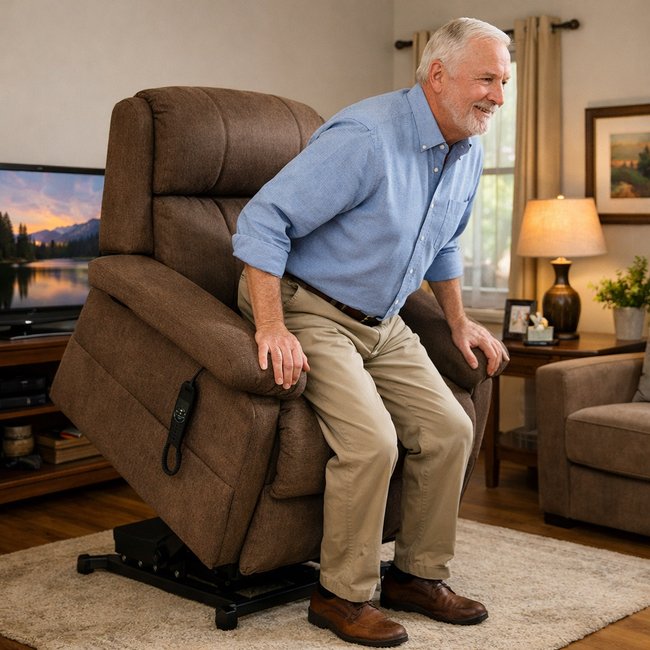
It’s not always walking that becomes difficult first — it’s standing up.
Many seniors can still move around fairly well, but getting out of a chair becomes a slow, awkward process. There’s the rocking forward. The push off the armrests. The steadying hand on nearby furniture. And sometimes, the quiet hope that no one is watching.
For adult children, the signs are just as clear. You may notice your parent avoiding certain chairs, hesitating before standing, or grabbing onto tables for support.
This is where lift chairs can make a significant difference in preparing your home for long-term living.

What Is a Lift Chair?
A lift chair (sometimes called a power lift recliner) looks like a traditional recliner, but it contains a motorized lifting mechanism. With the push of a button on a remote control, the chair gently tilts forward, helping the user transition from sitting to standing. It reduces the fall risk at home.
It reduces strain on:
-
Knees
-
Hips
-
Lower back
-
Core muscles
It’s important to note: a lift chair is not the same thing as a stair lift. A stair lift rides along a rail up a staircase. A lift chair stays in your living space and assists with sitting and standing. It’s an integral part of aging well at home.
Who Should Consider a Lift Chair?
Lift chairs aren’t just for extreme situations. They’re often most helpful before mobility becomes a crisis.
Seniors With:
-
Arthritis
-
Knee or hip pain
-
Weak leg strength
-
Balance concerns
-
Fatigue
-
Circulation issues
Standing from a seated position is one of the most physically demanding everyday movements. A lift chair reduces the force required and lowers the risk of strain.
After Surgery
This is one of the most common times a lift chair becomes essential.
Recovery from:
-
Knee replacement
-
Hip replacement
-
Back surgery
-
Abdominal surgery
can make standing independently extremely difficult for weeks.
We purchased a lift chair for my husband after surgery, and it made daily life significantly easier. What looks like a simple movement — getting up from a chair — can become exhausting and even unsafe during recovery.
A lift chair removes that struggle and allows healing to happen with less stress. Better health for seniors requires thought and planning. Safety doesn’t stop with mobility aids – your home setup matters as well. Learn more about bathroom safety for seniors.
When Adult Children Start Noticing Changes
Sometimes the senior doesn’t think they need help — but the adult child sees what’s happening:
-
Rocking forward repeatedly to gain momentum
-
Grabbing furniture to steady themselves
-
Avoiding low chairs
-
Increased fall risk during transitions
Most falls happen during movement transitions — not while walking down the hallway. The sit-to-stand motion is one of the highest-risk moments in daily life.
A lift chair provides controlled, steady assistance.
Do Lift Chairs Help Prevent Falls?
Yes — especially during the most vulnerable moment: standing up.
When legs are weak or painful, people often push too hard, lose balance, or shift their weight unevenly. A lift chair reduces that instability by:
-
Supporting body weight gradually
-
Providing smooth forward tilt
-
Reducing knee and hip strain
-
Allowing a stable, upright transition
While no chair can eliminate fall risk entirely, it can significantly reduce strain and instability in one of the most dangerous daily movements.
What to Look for When Buying a Lift Chair
This is where many people make mistakes — including us.
Size and Fit Matter More Than You Think
When we decided to purchase a lift chair, we found one on Facebook Marketplace. It looked clean and barely used. My husband sat in it for a few minutes while we were in the seller’s home, and it seemed fine at the time.
But trying a chair for a few minutes isn’t the same as living with it.
Once we brought it home and began using it daily, we realized it wasn’t quite right. The seat felt a bit tight in width, and the chair back was too short for him to comfortably rest his head.
It technically worked — but comfort matters, especially when someone is sitting for extended periods during recovery.
That experience taught us something important:
Measure before you buy.
Before purchasing a lift chair:
-
Measure the seat width of a chair in your home that feels comfortable.
-
Measure the seat depth.
-
Measure the back height.
-
Measure the distance from floor to seat.
Then compare those measurements carefully to the lift chair specifications.
Even an inch or two can make a difference.
Single Motor vs. Dual Motor
-
Single motor: Back and footrest move together.
-
Dual motor: Back and footrest move independently.
Dual motor models provide more positioning flexibility and are often preferred for extended sitting.
Weight Capacity
Always check weight ratings. Most standard chairs support 300–375 pounds, but heavy-duty models are available.
Chair Size (Petite, Medium, Large)
Lift chairs are not one-size-fits-all.
Height and body proportions matter. A chair that’s too large can be just as uncomfortable as one that’s too small.
Fabric and Cleaning
Consider:
-
Breathable fabrics
-
Easy-to-clean upholstery
-
Leather vs. microfiber
-
Pets in the home
Battery Backup
In case of power outage, some models include battery backup so the lift feature still works.
This is a small feature that can make a big difference.
How Much Does a Lift Chair Cost?
Lift chairs typically range from:
-
$600–$900 (basic models)
-
$900–$1,500 (mid-range)
-
$1,500+ (premium models with heat, massage, dual motor, enhanced padding)
At first glance, this may seem like a significant investment.
But compare that to:
-
The cost of an ER visit after a fall
-
Surgery or rehabilitation
-
Loss of independence
-
Long-term care placement
When viewed as a safety tool rather than a luxury item, the value becomes clearer.
When a Lift Chair May Not Be Enough
A lift chair works best when someone can still bear some weight and follow basic movement instructions.
It may not be sufficient if:
-
The person is completely immobile
-
Severe cognitive decline prevents safe use
-
Stairs present a larger safety issue
-
The space is too narrow for proper positioning
In some cases, additional home modifications may be necessary. Rollators are great for balance support
Independence and Dignity Matter
Needing help standing up doesn’t mean someone has lost independence. It simply means the body has changed.
A lift chair isn’t about weakness. It’s about planning ahead, reducing strain, and protecting safety.
For seniors, it can mean:
-
Less pain
-
Less embarrassment
-
More confidence
For adult children, it can mean:
-
Peace of mind
-
Reduced caregiver strain
-
Lower fall risk
Sometimes the smartest decision isn’t waiting until something goes wrong — it’s making a small adjustment before it does.
As always, please contact me with questions or comments.