Best Upright Rollators for Seniors Who Want to Stay Independent
(Why Arm Support and Proper Height Made All the Difference for Me)
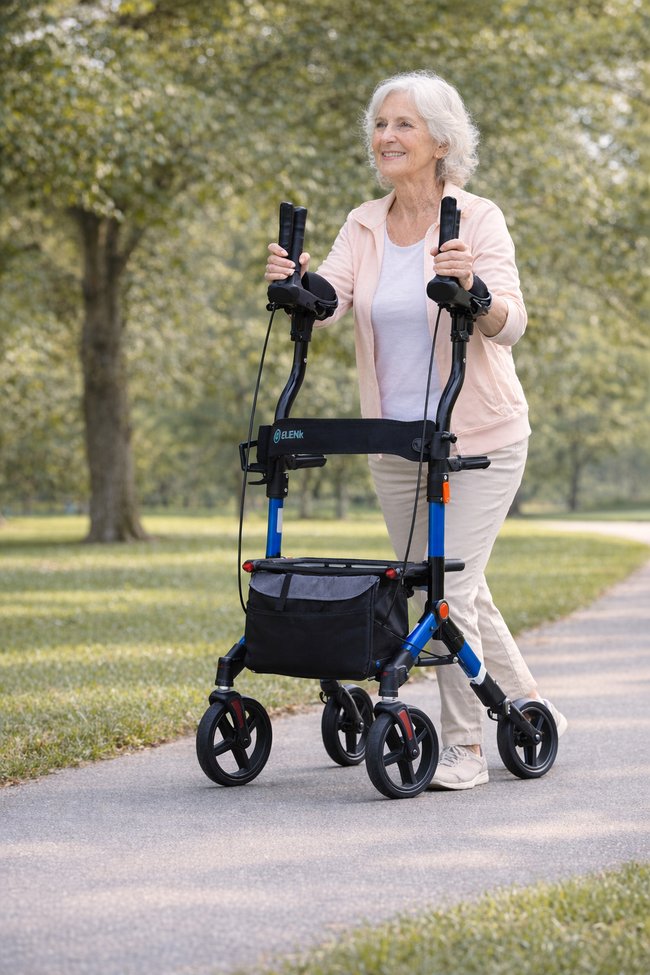
After falling off a ladder and breaking my back in three places, recovery changed the way I move. The healing process placed extra strain on knees that were already worn down from years of use. Walking became slower, heavier, and more painful than it needed to be.
I didn’t want to stop moving. I didn’t want to depend entirely on a wheelchair. I needed something that would protect my knees while still allowing me to stay active.
That’s when I discovered how much difference the right rollator can make. Mobility support is important, but so is a safe environment – Here’s how to improve bathroom safety at home.
Not just any rollator — the right design.

Why I Chose a Rollator Instead of a Wheelchair
My daughter generously bought me a beautiful battery-operated wheelchair. It was thoughtful and helpful — and it absolutely has its place.
But I still reach for my rollator most of the time.
Here’s why:
-
It keeps me walking.
-
It keeps my circulation moving.
-
It keeps my muscles engaged.
-
It’s quicker for everyday movement inside the home.
-
I don’t have to transfer in and out constantly.
A wheelchair replaces walking.
A rollator supports it.
For someone trying to maintain strength and independence after 60, that difference matters. Movement supports circulation.
The Key Difference: Upright Rollators with Arm Support
I first tried a standard rollator. It pushed smoothly and offered some support. But I was still leaning forward and still placing most of my weight on my knees.
When I tried an upright rollator with padded forearm supports, the difference was immediate.
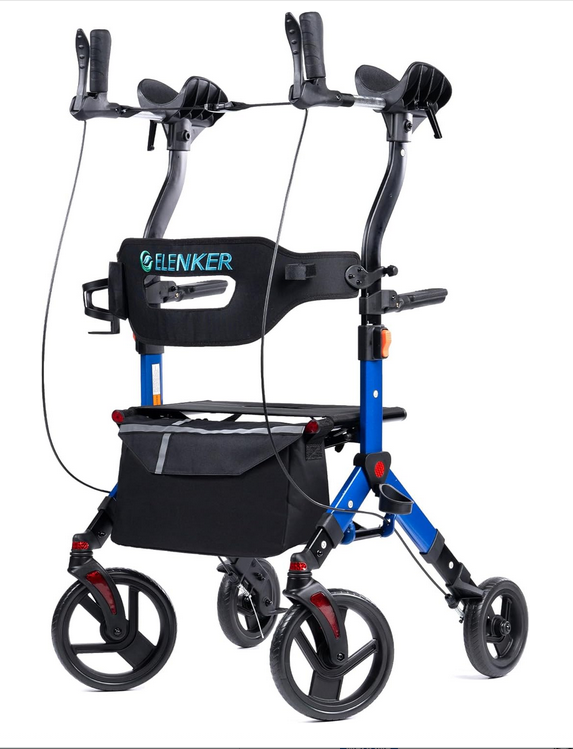
Even though I’m 5’2″, the adjustable height allowed my elbows to rest comfortably while shifting some of my weight into my arms instead of straight down into my knees.
Those armrests are the key.
With proper forearm support:
-
Posture improves.
-
Forward hunching decreases.
-
Knee strain is reduced.
-
Energy is conserved.
-
Stability increases.
This isn’t just about comfort. It’s about biomechanics and weight distribution.
Why Upright Posture Matters for Knee Pain
When handles are too low, you naturally lean forward. That forward lean increases pressure on the knees and lower back.
An upright rollator allows:
-
A more neutral spine position
-
Better weight distribution
-
Reduced joint compression
-
Smoother walking rhythm
For seniors dealing with knee arthritis, fatigue, or back issues, that adjustment can make walking feel manageable again.
I Can Move Through the House Faster and More Confidently
With the upright rollator:
-
It turns easily through doorways. It turns on a dime.
-
It maneuvers around furniture.
-
I can place items on the seat to carry them safely.
-
I move through the house in about half the time.
The built-in seat isn’t just for resting. It’s functional support for carrying light items without putting more strain on the knees.
That makes everyday life easier. But, remember that while mobility aids help, your home setup matters as well. Read my informative article on how to improve home safety throughout your home.
What to Look for When Buying an Upright Rollator
If you’re considering one, here are the most important features to evaluate.
1. Adjustable Handle Height
Even shorter users (like me) benefit from adjustable models. Proper elbow bend (about 15–20 degrees) is important.
2. Forearm Support Pads
Padded armrests allow weight to shift into the arms rather than the knees.
3. Brake System
The brake handles should be easy to grip and responsive. Safety is critical.
4. Wheel Size
Larger wheels handle sidewalks and uneven surfaces better. Smaller wheels may work for strictly indoor use.
5. Seat Stability
Ensure the seat feels sturdy and wide enough to rest comfortably.
6. Weight Capacity
Always check the manufacturer’s recommended weight range.
Example of an Upright Rollator with Arm Support
If you’re looking for an example of the style I described, this upright rollator model with padded forearm supports and adjustable height is similar to what works well for me:
👉 Click here to purchase this awesome rollator.
Look specifically for:
-
Adjustable forearm supports
-
Stable frame
-
Locking brakes
-
Smooth maneuverability
Always review specifications carefully to ensure proper fit.
Who Benefits Most from an Upright Rollator?
This style may be the best rollator if you:
-
Have knee arthritis
-
Experience fatigue when walking
-
Lean heavily on countertops for support
-
Want to avoid relying solely on a wheelchair
-
Need improved posture while walking
It provides stability without completely replacing movement. For more fall prevention strategies, take inventory of things that create risk.
When a Rollator May Not Be Enough
An upright rollator may not be appropriate if:
-
You cannot bear weight on your legs at all
-
You have severe balance instability
-
A physician recommends full wheelchair support
Always prioritize safety over pride. Supporting muscle function with proper nutrition — including adequate magnesium — can also help reduce cramping and fatigue. There are also great lift chairs for sit-to-stand mobility support.
Independence Is the Goal
Using a rollator isn’t surrender.
For me, it’s strategy.
It protects my knees.
It supports my back.
It allows me to move more confidently.
It keeps me walking.
Movement supports circulation.
Movement supports strength.
Movement supports mood.
The right mobility tool doesn’t reduce independence — it extends it.
As always, please contact me with any questions or comments.